Tài liệu hỗ trợ

Tải MIỄN PHÍ file Word kèm ma trận và lời giải chi tiết

Liên hệ Zalo 0915347068 để nhận file nhanh chóng.

Liên hệ Zalo 0915347068

ĐỀ VIP 2 - TT - MỤC TIÊU 9+ TN THPT MÔN TIẾNG ANH 2026

(Đề thi có ... trang)

Môn thi: Tiếng Anh

Năm 2026

Thời gian làm bài: ... phút, không kể thời gian phát đề.

Họ, tên thí sinh:

Số báo danh:

Read the following advertisement and mark the letter A, B, C or D on your answer sheet to indicate the option that best fits each of the numbered blanks from 1 to 6.

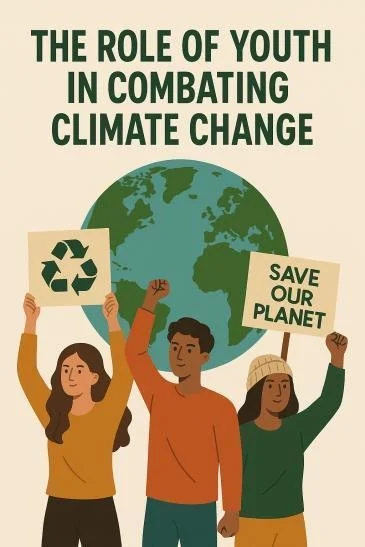
The Role of Youth in Combating Climate Change

        Climate change threatens our future, and young people worldwide are stepping up courageously to (1)_________ this unprecedented global environmental challenge. Research shows that children born in 2020 will face extreme weather conditions throughout their lives if global temperatures, (2)_________ are currently rising at an alarming rate, continue to increase.

        The inspiring youth-led (3)_________, which has gained tremendous momentum internationally over recent years, represents hope for meaningful environmental action. Young activists across different continents, (4)_________ immediate and comprehensive policy changes, demonstrate remarkable creativity and unwavering determination in their fight for climate justice.

        A vast (5)_________ of leading environmental scientists agree that youth participation is absolutely essential for achieving sustainable development goals. These passionate and dedicated individuals possess not only the boundless energy but also the innovative technological solutions needed to (6)_________ climate challenges effectively.

        Don't wait for tomorrow—join local environmental groups, promote sustainable practices, and make your voice heard! Every action counts in building a greener world for future generations.

https://www.undp.org/lk

Question 1:A. take on
B.  
take over
C.  
take up
D.  
take off

Xem chi tiếtXem đáp án và lời giải

Question 2:A. who
B.  
that
C.  
which
D.  
whose

Xem chi tiếtXem đáp án và lời giải

Question 3:A. consortium
B.  
coalition
C.  
manifesto
D.  
movement

Xem chi tiếtXem đáp án và lời giải

Question 4:A. have demanded
B.  
which demanded
C.  
demanding
D.  
was demanded

Xem chi tiếtXem đáp án và lời giải

Question 5:A. amount
B.  
majority
C.  
quantity
D.  
portion

Xem chi tiếtXem đáp án và lời giải

Question 6:A. address 
B.  
addressee
C.  
addressor
D.  
addresserly


Xem chi tiếtXem đáp án và lời giải

Read of the following leaflet and mark the letter A, B, C or D on your answer sheet to indicate the option that best fits each of the numbered blanks from 7 to 12.

EDUCATION UNDER FIRE: A CALL FOR ACTION

        Children in Haiti are clearly (7)_________ great risk of losing their fundamental right to education due to escalating gang violence. In Port-au-Prince alone, over 1,600 schools have closed, leaving 240,000 students without access to learning opportunities. (8)_________, quality education still remains our most powerful and effective weapon against violence and social instability. Comprehensive global (9)_________ must immediately prioritize educational infrastructure development in these dangerous crisis zones.

        Thousands of innocent families have been (10)_________ displaced from their local communities, creating yet another devastating and complex challenge for educational continuity. These vulnerable children need immediate support to continue their studies.

        The others who bravely remain in remote conflict-affected (11)_________ face daily life-threatening threats that prevent them from attending school safely. Without proper intervention, an entire generation risks being left behind. Research proves that quality education, among (12)_________ essential factors, builds peaceful societies by providing hope and opportunities for youth development. We must act now to protect these children's futures.

        Join our mission to rebuild educational systems in crisis zones. Every donation makes a difference!

https://www.lemonde.fr/lk

Question 7:A. to
B.  
at
C.
for
D.  
about

Xem chi tiếtXem đáp án và lời giải

Question 8:A. Nevertheless
B.  
Furthermore
C.  
Consequently
D.  
Therefore

Xem chi tiếtXem đáp án và lời giải

Question 9:A. humanitarian assistance programs
B.  
assistance programs humanitarian 


C.  
programs humanitarian assistance
D.
 humanitarian programs assistance

Xem chi tiếtXem đáp án và lời giải

Question 10:A. violently
B.  
brutally
C.  
forcibly
D.  
unwillingly

Xem chi tiếtXem đáp án và lời giải

Question 11:A. regions
B.  
territories
C.  
zones
D.  
areas

Xem chi tiếtXem đáp án và lời giải

Question 12:A. the others
B.  
another
C.  
others
D.  
others


Xem chi tiếtXem đáp án và lời giải

Mark the letter A, B, C or D on your answer sheet to indicate the best arrangement of utterances or sentences to make a meaningful exchange or text in each of the following questions from 13 to 17.

Question 13:

A.         Dad: Well, imagine if all bees disappeared tomorrow. No more flowers, no more fruits, no more food for animals...

B.         Alex: Oh, wow! So these little bees are like the most important workers in nature's big factory?

C.         Alex: Dad, why do they call bees "keystone species"? They're just tiny bugs!

A.  a-c-b        
B.  
c-b-a
C.  
b-a-c        
D.  
c-a-b

Xem chi tiếtXem đáp án và lời giải

Question 14:

A.         Sarah: I agree, and I think the government should create equal opportunities for everyone, regardless of where they live.

B.         Mike: That's true because rich communities have more tax money, so they can hire good teachers and buy new books.

C.         Sarah: It's unfair when your zip code decides your future, although many people don't realize this problem exists.

D.         Sarah: I read that children who live in wealthy areas get better education, but kids in poor neighborhoods often struggle with bad schools.

e.        Mike: If we want to help these kids, we need to send more resources to poor areas, or the gap will keep growing.

A.  b-e-d-a-c
B.  
d-b-c-e-a        
C.  
d-c-a-e-b        
D.  
c-e-b-d-a

Xem chi tiếtXem đáp án và lời giải

Question 15:

Dear Emma,

A.         Since I started working from home, I've helped my family while saving for my future.

B.         I hope that by next year, I'll have enough savings so I can move out.

C.         When I moved back home after college, I felt embarrassed because all my friends had apartments.

D.         Although living with parents saves money, I sometimes feel like I'm still a child.

e.        Even though it's challenging, I'm learning that independence means being responsible, not just living alone.

Love,

LK

A.  e-d-c-a-b
B.  
b-a-d-e-c
C.  
c-d-a-e-b
D.  
a-d-e-c-b

Xem chi tiếtXem đáp án và lời giải

Question 16:

A.         Since healthy soil feeds the world, we need to take care of it now, or future generations won't have enough food to survive.

B.         When farmers use too many chemicals, the soil becomes sick, so many helpful organisms die, and the earth loses its power.

C.         Soil is alive because it contains millions of tiny organisms, and these creatures help plants grow healthy and strong.

D.         Although we can't see them, bacteria and worms work together to break down dead leaves, which creates nutrients for new plants.

e.        If we want to protect our soil, we must use natural methods like composting, and we should avoid harmful pesticides that kill good bacteria.

A.  b-e-c-d-a
B.  
d-e-b-c-a        
C.  
c-d-b-e-a
D.  
e-d-c-b-a

Xem chi tiếtXem đáp án và lời giải

Question 17:

A.         Millionaires choose careers that give them freedom, although they don't earn as much money as traditional workers do.

B.         When people become freelance writers or online teachers, they can work from anywhere, and they have control over their daily schedules.

C.         Since they value experiences more than expensive things, these workers often travel the world while they earn enough money to live comfortably.

D.         Although time millionaires face financial challenges, they feel happier because they can spend time with family, and they don't stress about office politics.

e.        If more people understood that time is precious, they might choose freedom over big salaries, so society would become less focused on money.

A.  a-b-c-d-e        
B.  
a-e-d-c-b
C.  
a-c-d-e-b        
D.  
a-c-d-b-e


Xem chi tiếtXem đáp án và lời giải

Read the following passage about A Contemporary Crisis and mark the letter A, B, C or D on your answer sheet to indicate the option that best fits each of the numbered blanks from 18 to 22.

The digital divide represents one of the most pressing educational challenges confronting contemporary society. Students who lack adequate access to reliable internet connections and modern technological devices inevitably find themselves at a considerable disadvantage compared to their digitally equipped counterparts. The recent pandemic has amplified these pre-existing inequalities to unprecedented levels, (18)_________. Technology integration in educational institutions has been accelerated globally; however, marginalized populations continue struggling persistently with inadequate infrastructure and severe financial constraints that perpetuate systemic disadvantages. Research demonstrates convincingly that academic performance deteriorates dramatically when learners cannot participate effectively in digital learning environments; (19)_________. Educational institutions that actively prioritize comprehensive digital literacy development create substantially more equitable opportunities for all students, regardless of their socioeconomic background or geographical location within their communities. If governments had invested more substantially in robust technological infrastructure much earlier, (20)_________. Addressing this complex, multifaceted issue requires implementing comprehensive strategies, including affordable device distribution programs, enhanced broadband accessibility initiatives, and systematic teacher professional training programs designed specifically for underserved populations. (21)_________. Collaborative efforts between public institutions, private sector organizations, and community groups prove absolutely essential for achieving sustainable progress and meaningful transformation. Persistent educational inequality, (22)_________, will otherwise continue to perpetuate broader social divisions and undermine democratic principles.

https://www.oecd.org/lk

Question 18:

A.  and this is what concerns educators most profoundly across diverse communities worldwide

B.  and this is what business leaders most effectively throughout various international corporate markets

C.  and this is whether healthcare systems improve patient outcomes across global medical institutions

D.  and this that technological innovations advance rapidly benefits modern society significantly across regions

Xem chi tiếtXem đáp án và lời giải

Question 19:

A.  meanwhile, environmental protection measures increase significantly and improve air quality standards enhance community health

B.  furthermore, digital marketing strategies develop extensively and comprehensively social media platforms transform consumer behavior

C.  consequently, long-term career prospects become severely compromised and limited, affecting entire generations of students

D.  therefore, modern technological innovations advance rapidly and efficiently, businesses expand their global market reach

Xem chi tiếtXem đáp án và lời giải

Question 20:

A.  modern technological advances having already been thoroughly researched or potentially implemented successfully

B.  innovative learning approaches who have been carefully developed or potentially standardized completely

C.  successful teaching methods which have been systematically implemented or potentially expanded nationwide

D.  current educational disparities would have been significantly reduced or potentially eliminated entirely

Xem chi tiếtXem đáp án và lời giải

Question 21:

A.  However, environmental protection policies should address climate change, renewable energy sources provide sustainable growth

B.  Moreover, curriculum reform must incorporate digital competencies alongside traditional subjects to ensure holistic development

C.  Furthermore, business expansion strategies that implement global marketing approaches while maintaining local cultural sensitivity

D.  Additionally, healthcare innovations require advanced medical technologies patients receive better treatment through improved services

Xem chi tiếtXem đáp án và lời giải

Question 22:

A.  which successfully implemented advanced technological solutions during previous academic years at various international institutions

B.  will establishing comprehensive environmental policies throughout upcoming decades at numerous governmental administrative departments

C.  which desperately requires immediate systematic coordinated intervention at multiple educational and governmental levels

D.  effectively manages complex financial transactions between different corporate organizations and international banking systems


Xem chi tiếtXem đáp án và lời giải

Read the following passage about An Urgent Call for Transformation and mark the letter A, B, C or D on your answer sheet to indicate the best answer to each of the following questions from 23 to 30.

Contemporary society faces an unprecedented social crisis characterized by economic insecurity, escalating inequality, and deteriorating trust across multiple sectors worldwide. This multifaceted challenge threatens sustainable development globally, demanding immediate comprehensive intervention from international communities and governmental organizations alike. The United Nations University's recent flagship publication reveals alarming statistics that underscore the severity of these deeply interconnected problems affecting billions globally.

Over
B. 8 billion individuals—representing more than one-third of humanity—survive on merely
B. 15 to 6.85 daily, positioning them perilously close to extreme poverty and financial destitution worldwide. Employment precariousness has reached critical levels globally, with approximately 60% of the global workforce expressing profound anxiety about their job security and future employment prospects today. This widespread vulnerability clearly demonstrates how economic instability has become deeply embedded within modern socioeconomic structures, creating systemic risks for entire populations and vulnerable communities.

Income inequality continues expanding rapidly across 65% of nations worldwide, perpetuated by deeply entrenched factors including racial discrimination, caste systems, geographical disadvantages, and family background disparities everywhere. Simultaneously, social cohesion deteriorates dramatically as over half the world's population expresses minimal confidence in governmental institutions and political leadership. Interpersonal trust among citizens also declines significantly between generational cohorts, indicating fundamental breakdowns in the social fabric and community bonds.

The forthcoming Second World Summit for Social Development in Doha presents a truly pivotal opportunity for coordinated global action and international collaboration. Experts strongly advocate for transformative policy frameworks built upon three foundational principles: equity, universal economic security, and solidarity. These comprehensive strategies aim to reconstruct social cohesion while addressing the root causes of contemporary challenges effectively and systematically. Without decisive implementation of such comprehensive reforms, current crises may irreversibly undermine democratic institutions and sustainable development goals worldwide.

https://unu.edu/lk

Question 23: All of the following contribute to income inequality EXCEPT _________.

A.  Racial discrimination

B.  Caste systems

C.  Climate disasters

D.  Family background disparities

Xem chi tiếtXem đáp án và lời giải

Question 24: The word “flagship” in paragraph 1 is OPPOSITE in meaning to _________.

A.  subsidiary                                B. predominant                                C. prestigious                                D. paramount

Xem chi tiếtXem đáp án và lời giải

Question 25: The word “their” in paragraph 2 refers to _________.

A.  international communities

B.  the global workforce

C.  governmental organizations

D.  employment prospects

Xem chi tiếtXem đáp án và lời giải

Question 26: The word “entrenched” in paragraph 3 could be best replaced by _________.

A.  superficial                                B. ingrained                                        C. volatile                                        D. systematic

Xem chi tiếtXem đáp án và lời giải

Question 27: Which of the following best paraphrases the underlined sentence in paragraph 4?

A.  These extensive policy measures seek to rebuild community bonds while systematically tackling the fundamental origins of current societal problems through efficient approaches.

B.  These broad governmental initiatives intend to strengthen institutional frameworks while comprehensively resolving the surface-level symptoms of modern global issues through coordinated methods.

C.  These wide-ranging reform proposals plan to enhance economic stability while simultaneously confronting the secondary effects of present-day crises using strategic interventions.

D.  These holistic intervention programs aspire to restore political legitimacy while directly combating the immediate manifestations of contemporary difficulties through collaborative techniques.

Xem chi tiếtXem đáp án và lời giải

Question 28: Which of the following is TRUE according to the passage?

A.  Employment anxiety affects 65% of the global workforce, while income inequality expands across 60% of nations worldwide.

B.  The Second World Summit for Social Development in Geneva will focus on four foundational principles for policy reform.

C. Over
B. 8 billion people survive on
B. 15 to 6.85 dollars daily, representing more than one-third of the global population.

D.  Interpersonal trust has completely disappeared between all generational cohorts, causing a total breakdown of the social fabric globally.

Xem chi tiếtXem đáp án và lời giải

Question 29: In which paragraph does the writer mention the daily income range that 2.8 billion people live on?

A.  Paragraph 1                                B. Paragraph 2                                C. Paragraph 3                                D. Paragraph 4

Xem chi tiếtXem đáp án và lời giải

Question 30: In which paragraph does the writer mention that policy frameworks should be built upon how many foundational principles?

A.  Paragraph 1                                B. Paragraph 2                                C. Paragraph 3                                D. Paragraph 4


Xem chi tiếtXem đáp án và lời giải

Read the following passage about the Climate Change Forces Global Educational Infrastructure Crisis and mark the letter A, B, C or D on your answer sheet to indicate the best answer to each of the following questions from 31 to 40.

As unprecedented heatwaves intensify worldwide, educational institutions face catastrophic disruptions that threaten millions of children's academic futures. When temperatures soar beyond tolerable limits, administrators must dig their heels in and make difficult decisions to close schools entirely, prioritizing student safety over curriculum continuity. This escalating phenomenon demonstrates how climate volatility directly undermines educational accessibility, particularly affecting vulnerable populations in developing regions where infrastructure remains inadequate. [I] Traditional classroom environments, originally designed for moderate temperatures, prove increasingly insufficient against the relentless thermal extremes that characterize contemporary climate patterns.

International organizations have mobilized comprehensive adaptation strategies to combat this educational emergency. [II] However, funding remains severely limited across most developing nations worldwide. Their initiatives encompass diverse approaches: cultivating drought-resistant vegetation for natural shade, applying reflective coating materials to reduce thermal absorption, and installing renewable energy-powered cooling systems to maintain comfortable learning environments. Collaborative frameworks between governmental agencies, development banks, and non-governmental organizations facilitate resource allocation and technical expertise sharing to maximize intervention effectiveness across varied geographical contexts.

Several pioneering examples illustrate innovative solutions being deployed globally. Brazil's Pará State received substantial investment—approximately $100 million from the Inter-American Development Bank—to retrofit 55 educational facilities serving 24,000 students. Meanwhile, architect Francis Kéré revolutionized Burkina Faso's school design, creating naturally ventilated structures using indigenous materials that withstand extreme temperatures without conventional air conditioning. [III] Even temperate regions like the United Kingdom experience classroom temperatures reaching 36°C, causing student exhaustion and diminished concentration levels. Athens faces severe urban heat island effects, prompting municipal authorities to establish funding mechanisms enabling schools to implement comprehensive climate-adaptation projects.

The implications extend far beyond immediate discomfort. [IV] Excessive heat significantly impairs cognitive performance, increases absenteeism rates, and jeopardizes long-term developmental outcomes—consequences that disproportionately affect low-income communities with fragile infrastructure. Without urgent, large-scale investment in climate-resilient educational facilities, millions of children will continue experiencing educational disruption, exacerbating global inequality as environmental conditions deteriorate further. Educational stakeholders recognize that inadequate thermal management systems perpetuate learning disadvantages, creating cyclical poverty patterns that undermine sustainable development objectives and democratic participation opportunities for future generations.

https://www.ft.com/lk

Question 31: The phrase “dig their heels in” in paragraph 1 has the closest meaning to _________.

A.  give in                                        B. back down                                C. hold up                                        D. stand firm

Xem chi tiếtXem đáp án và lời giải

Question 32: All of the following adaptation measures are mentioned EXCEPT _________.

A.  Cultivating drought-resistant vegetation for natural shade

B.  Applying reflective coating materials to reduce thermal absorption

C.  Installing renewable energy-powered cooling systems

D.  Implementing underground geothermal cooling networks

Xem chi tiếtXem đáp án và lời giải

Question 33: Where in the paragraph does the following sentence best fit?

UNESCO and UNICEF report that over 80,000 schools across 87 countries have implemented heat-mitigation measures.

A. [I]
B. [II]
C. [III]
D. [IV]

Xem chi tiếtXem đáp án và lời giải

Question 34: The word “Their” in paragraph 2 refers to _________.

A.  International organizations (UNESCO and UNICEF)

B.  Educational institutions

C.  Developing nations

D.  Students

Xem chi tiếtXem đáp án và lời giải

Question 35: Which of the following best summarises paragraph 3?

A.  Development banks provide major funding for retrofitting educational facilities in developing countries worldwide.

B.  Innovative architectural designs using natural ventilation offer better alternatives to conventional air conditioning systems.

C.  Global examples show diverse innovative approaches to school heat problems across different regions and contexts.

D.  Municipal authorities establish funding mechanisms to address urban heat island effects in educational institutions.

Xem chi tiếtXem đáp án và lời giải

Question 36: The word “ventilated” in paragraph 3 is OPPOSITE in meaning to _________.

A.  renovated
B.  
insulated
C.  
spacious
D.  
suffocating

Xem chi tiếtXem đáp án và lời giải

Question 37: Which of the following best paraphrases the underlined sentence in paragraph 4?

A.  Immediate funding for climate-resistant schools is essential to prevent academic disruptions that worsen global disparities.

B.  Large-scale investment in weather-adapted facilities is necessary to avoid educational setbacks that intensify inequality.

C.  Failure to invest urgently in climate-resilient schools will perpetuate educational disruptions and exacerbate global inequality.

D.  Comprehensive funding for environmentally-adapted systems is crucial to eliminate academic interruptions that amplify inequities.

Xem chi tiếtXem đáp án và lời giải

Question 38: Which of the following is TRUE according to the passage?

A.  Over 80,000 schools in 87 countries have implemented heat-mitigation measures, according to UNESCO and UNICEF.

B.  Approximately 75,000 schools in 92 countries have adopted cooling technologies, according to the World Bank.

C.  Brazil's Pará State received $150 million to retrofit 45 educational facilities serving 30,000 students.

D. Francis Kéré designed air-conditioned structures in Ghana using indigenous materials for extreme temperatures.

Xem chi tiếtXem đáp án và lời giải

Question 39: Which of the following can be inferred from the passage?

A.  Current mitigation strategies will adequately resolve educational disruptions caused by escalating global temperatures.

B.  Developed countries with advanced infrastructure remain largely immune from climate-related educational challenges.

C.  Addressing climate impacts on education requires sustained long-term commitment beyond temporary intervention measures.

D.  Advanced cooling technologies provide the most comprehensive solution for resolving all climate-related educational problems.

Xem chi tiếtXem đáp án và lời giải

Question 40: Which of the following best summarises the passage?

A.  Climate change creates unprecedented educational disruptions requiring immediate school closures and threatening academic continuity for vulnerable student populations worldwide.

B.  Rising temperatures disrupt global education systems, prompting international mitigation efforts, but sustained investment remains crucial for comprehensive long-term solutions.

C.  International organizations implement diverse heat-mitigation strategies, including natural ventilation, reflective materials, and renewable cooling systems, across affected schools globally.

D.  Excessive heat impairs cognitive performance and increases educational inequality, particularly affecting low-income communities with inadequate infrastructure and limited resources.

Xem chi tiếtXem đáp án và lời giải