Tài liệu hỗ trợ

Tải MIỄN PHÍ file Word kèm ma trận và lời giải chi tiết

Liên hệ Zalo 0915347068 để nhận file nhanh chóng.

Liên hệ Zalo 0915347068

Đề 16 Thi Tiếng Anh Giai Đoạn Nước Rút Cực Sát Đề Thi Thật Năm 2026 - FILE WORD CÓ LỜI GIẢI

(Đề thi có ... trang)

Môn thi: Tiếng Anh

Năm 2026

Thời gian làm bài: ... phút, không kể thời gian phát đề.

Họ, tên thí sinh:

Số báo danh:

Read the following announcement and mark the letter A, B, C or D on your answer sheet to indicate the option that best fits each of the numbered blanks from 1 to 6.

Important Health Notice

St. Catherine’s Primary School

Dear Parents and Guardians,IMG_256

Re: Seasonal Illness Outbreak

We regret to inform you that several students have (1) ______ down with flu-like symptoms over the past week. The school nurse has reported 23 confirmed cases across Years 3 to 6.

Preventive Measures:

I. Please ensure your child washes their hands regularly and uses (2) ______ hand sanitiser throughout the day.

II. Students exhibiting symptoms such as fever, persistent cough, or fatigue should remain at home (3) ______ they risk spreading the infection to classmates and staff.

III. We have arranged for (4) ______ cleaning of all classroom surfaces and communal areas.

When to Seek Medical Advice:

Contact your GP if your child’s condition deteriorates or if symptoms persist (5) ______ more than 48 hours. The NHS 111 service is available for urgent medical guidance.

We appreciate your cooperation in containing this outbreak. By working together, we can (6) ______ the spread of illness and ensure a safe learning environment for all students.

Yours faithfully,

Dr. Helen Morrison

Headteacher

(Based on standard school health communications, UK Department for Education guidelines)

Question 1. A. come                B. gone                C. fallen                D. taken

Xem chi tiếtXem đáp án và lời giải

Question 2. A. an ample amount of                        B. a sheer volume of


C.
 a substantial quantity of                        D. a great many

Xem chi tiếtXem đáp án và lời giải

Question 3. A. unless                B. as                        C. in case                D. provided that

Xem chi tiếtXem đáp án và lời giải

Question 4. A. thorough daily                                B. daily thorough        


C.
 thorough and daily                                D. a daily thorough

Xem chi tiếtXem đáp án và lời giải

Question 5. A. for                        B. during                C. within                D. over

Xem chi tiếtXem đáp án và lời giải

Question 6. A. curb                        B. cease                C. halt                        D. suspend


Xem chi tiếtXem đáp án và lời giải

Read the passage and mark the letter A, B, C or D on your answer sheet to indicate the best answer to each of the following questions from 7 to 16.

         Attention is a finite civic resource repeatedly commandeered by commercial actors. Airports, sidewalks, and feeds are saturated with solicitations that commandeer our gaze, while self-styled disrupters prospect in the “private headspace” to monetize it. In such a regime, we have traded away silence, the felt condition of not being addressed. [I] Like clean air, absence of address enables thinking; its depletion makes agency brittle. Without norms, the market colonizes what used to be ambient refuge and calls it innovation.

         Against this drift, Matthew Crawford proposes imagining an attentional commons – shared conditions that shield people from incessant capture. If attention were treated as a commons, it would demand stewardship rather than perpetual extraction. This reframing invites governance: constraints on unsolicited displays, default opt-outs, and duties of care for those who engineer attention-traps. [II] When we honor silence as infrastructure, we make room for thinking together, not merely scrolling alone, and we civilize the terms on which persuasion meets the passerby.

        Crawford traces the genealogy of distraction to the auctioning of public vistas and the legitimation of constant address; he first mapped this in “How We Lost Our Attention.” [III] His argument is less nostalgia than institutional design: without limits, the loudest bidder captures the square. At the Virginia Festival of the Book (March 18, Charlottesville), he will discuss these stakes with media scholar Siva Vaidhyanathan, connecting everyday bombardment with the ethics of designing environments fit for democratic attention.

        Practical implications follow. Cities can expand ad-free corridors and regulate attention-harvesting in transit; schools and libraries can prioritize quiet zones; platform defaults can privilege consent over capture. Registration remains free for the evening event, though seats are limited, and back issues of “Minding Our Minds” are modestly priced. [IV] None of this abolishes persuasion; it merely rebalances it so citizens can refuse address without penalty – the precondition for judgment rather than frictionless compliance.

(Adapted from The Hedgehog Review, “Toward an Attentional Commons,” and Matthew Crawford’s commentary)

Question 7. The word monetize in paragraph 1 mostly means ______.

A.  socially performative                                B. painfully obsolete

C.  commercially exploitable                                D. marginally lawful

Xem chi tiếtXem đáp án và lời giải

Question 8. Where in the passage does the following sentence best fit?

Civic norms, from noise ordinances to ad-free carriages, already instantiate small-scale guardianship of public attention.

A.  [I]                        B. [II]                                C. [III]                        D. [IV]

Xem chi tiếtXem đáp án và lời giải

Question 9. Which of the following best summarises paragraph 1?

A.  Commercial actors commandeer finite attention, eroding silence that makes thinking possible and rebranding intrusion as innovative progress.

B.  Digital platforms eliminated attention scarcity, leaving public spaces clearer and empowering citizens to ignore commercial appeals easily.

C.  Self-styled disrupters colonize private headspace, turning ambient refuge into a market and treating silence as expendable surplus to be strip-mined.

D.  The rise of disrupters has improved civic life because their messages are more informative than old advertising in transit hubs.

Xem chi tiếtXem đáp án và lời giải

Question 10. What does “silence” enable, according to the passage?

A.  Focused, unpressured thought and judgment        B. Faster shopping decisions online

C.  More persuasive corporate messaging                D. Cheaper public transit funding

Xem chi tiếtXem đáp án và lời giải

Question 11. According to paragraph 2, treating attention as a commons would entail ______?

A.  assigning duties that limit unsolicited capture in shared civic environments

B.  encouraging platforms to maximize engagement metrics at all costs always

C.  abolishing persuasion entirely from both markets and politics worldwide forever

D.  relying on personal willpower rather than any institutional limits whatsoever

Xem chi tiếtXem đáp án và lời giải

Question 12. What will the festival conversation likely examine, per paragraph 3?

A.  How design choices in media environments shape democratic attention and everyday autonomy

B.  Why advertising should be banned from all cities without any exceptions whatsoever

C.  Which app delivers the most notifications during a typical weekday morning commute

D.  Whether ticket prices rise because bookstores depend on registration fees for funding

Xem chi tiếtXem đáp án và lời giải

Question 13. The phrase the square in paragraph 3 refers to ______.

A.  public space        B. literal plaza                C. marketplace        D. book fair

Xem chi tiếtXem đáp án và lời giải

Question 14. Which of the following can be inferred from the passage?

A.  The author implies that policy tools already exist – like noise and ad restrictions – that can be expanded to protect shared attention without banning persuasion altogether.

B.  Because attention is infinite online, any attempt to regulate advertising would inevitably collapse democratic debate and make citizens less informed than they currently are today.

C.  Treating silence like infrastructure means eliminating smartphones from cities and requiring residents to live without digital media for most of their daily routines at all.

D.  Because events require registration, the text suggests they are monetized like ads and therefore contradict the very idea of an attentional commons in every way.

Xem chi tiếtXem đáp án và lời giải

Question 15. Which of the following best paraphrases the underlined sentence in paragraph 2?

A.  Considering attention a shared good would oblige institutions to manage it responsibly instead of continuously mining it for profit and engagement.

B.  If attention were private property, companies should maximize returns by any means including louder ads and default notifications without consent.

C.  Treating attention as commodity would justify perpetual harvesting, leaving stewardship unnecessary and viewers responsible for resisting whatever captures gaze.

D.  Seeing attention as aesthetic experience would prioritize art funding and cultural festivals while ignoring political economy of advertising in policy.

Xem chi tiếtXem đáp án và lời giải

Question 16. Which of the following best summarises the passage?

A.  The text argues for an attentional commons, urging civic rules to preserve silence against intrusive commercialization across platforms, streets, and institutions.

B.  It celebrates disruptive advertising as modern art that revitalizes public spaces and boosts creativity during commutes and shopping trips.

C.  The passage announces event logistics and pricing without presenting substantive claims about attention or persuasion ethics.

D.  It explains how attention scarcity is solved by unlimited feeds that neutralize advertising through smart personalization and optional silencing features.


Xem chi tiếtXem đáp án và lời giải

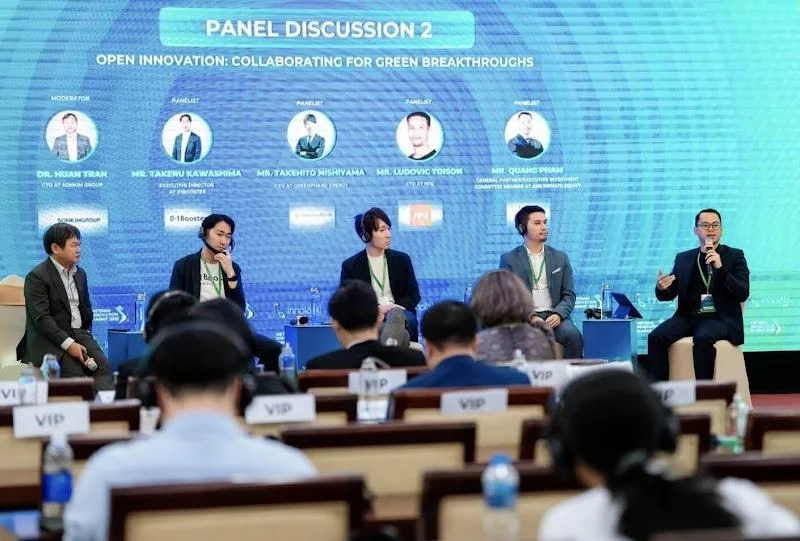
Read the following announcement and mark the letter A, B, C or D on your answer sheet to indicate the option that best fits each of the numbered blanks from 17 to 22.

Vietnam Innovation Summit 2025

Building Bridges to Innovation and GrowthIMG_256

The Vietnam Innovation Summit 2025, taking place November 6–7 in Ho Chi Minh City, represents a groundbreaking platform (17) ______ innovation leaders converge to shape the future of Southeast Asian entrepreneurship. With participation from an impressive (18) ______ of over 3,000 attendees and 150 distinguished experts spanning more than 30 countries, this summit promises unprecedented networking opportunities.

Key Highlights

The program will (19) ______ interactive workshops, pitch competitions, and panel discussions addressing artificial intelligence, sustainable technology, and digital transformation. Industry (20) ______ will share cutting-edge insights into emerging markets and investment trends across the region.

Entrepreneurs seeking to (21) ______ strategic partnerships with international investors should not miss this transformative event. Registration is now open at the official portal, with early-bird rates (22) ______ until October 15th.

(Adapted from https://koreatechdesk.com/vietnam-

innovation-summit-2025-asia-startup-power-global-innovation)

Question 17.        A. when                B. where                C. at which                D. of which

Xem chi tiếtXem đáp án và lời giải

Question 18.        A. spectrum                B. scope                C. turnout                D. scale

Xem chi tiếtXem đáp án và lời giải

Question 19.        A. incorporate        B. embrace                C. feature                D. integrate

Xem chi tiếtXem đáp án và lời giải

Question 20.        A. pioneers                B. pioneering                C. pioneered                D. pioneer

Xem chi tiếtXem đáp án và lời giải

Question 21.        A. forge                B. mold                C. craft                D. shape

Xem chi tiếtXem đáp án và lời giải

Question 22.        A. applying                B. available                C. accessing                D. approaching


Xem chi tiếtXem đáp án và lời giải

Mark the letter A, B, C or D on your answer sheet to indicate the best arrangement of utterances or sentences to make a cohesive and coherent text.

Question 23. a. However, integration challenges surfaced: curtailment, transmission bottlenecks, and storage gaps demanding coordinated upgrades.

B. Feed-in tariffs and grid commitments unlocked capital, prompting rapid deployment across coastal and highland sites.

C. Large utility-scale projects emerged, while rooftop systems enabled households and factories to offset consumption.

D. Renewable energy investment has surged, repositioning Vietnam as a regional leader in solar and wind.

e. Addressing these constraints will stabilise returns and anchor a resilient, diversified, low-carbon power mix.

A.  d-c-b-a-e                        B. d-b-a-c-e                        C. b-d-c-a-e                        D. d-b-c-a-e

Xem chi tiếtXem đáp án và lời giải

Question 24. Dear Dr. Nguyen,

A. To confirm your attendance, please complete the registration form via the link provided in this email by November 15th.

B. The registration process is straightforward and takes approximately five minutes to complete once you access the portal.

C. We are delighted to invite you to the International Academic Conference on Sustainable Development, scheduled for December 10-12, 2025.

D. Please note that accommodation arrangements must be finalized before November 20th to guarantee availability at the conference venue.

e. For any inquiries regarding the programme or logistics, feel free to contact us at conference@university.edu.

Yours sincerely,

Conference Organizing Committee

A.  a-b-c-d-e                        B. c-a-d-b-e                        C. c-a-b-d-e                        D. b-c-a-d-e

Xem chi tiếtXem đáp án và lời giải

Question 25. a. Van: Thanks for understanding. Maybe we could reschedule for next week instead?

B. Duy: I appreciate the invitation, Van, but I already have plans for dinner that evening.

C. Duy: Sure, that works for me. Just let me know which day suits you best.

A.  b-a-c                        B. a-b-c                        C. c-b-a                        D. b-c-a

Xem chi tiếtXem đáp án và lời giải

Question 26. a. Ava: Do you still use plastic bags when shopping?

B. Ava: That’s great, but plastic bags are still cheaper and more accessible.

C. Ethan: Sometimes, but I try to switch to eco-friendly ones whenever possible.

D. Ava: We should encourage both convenience and sustainability together.

e. Ethan: True, but reducing waste gives us a sense of responsibility.

A.  a-c-b-e-d                         B. a-b-d-c-e                         C. a-c-b-d-e                         D. b-a-c-e-d

Xem chi tiếtXem đáp án và lời giải

Question 27. a. Our team was assigned a challenging project and I eagerly tried to take the lead on everything immediately.

B. During a summer internship at a tech startup, I worked with five diverse colleagues on software development.

C. Unfortunately, my domineering approach created tension and several team members stopped contributing their valuable ideas.

D. This experience was profoundly educational and revealed that true leadership means empowering others rather than controlling them.

e. As a result, I learned to listen actively and learned the ropes of collaborative problem-solving through consensus.

A.  a-b-c-d-e                        B. b-c-a-e-d                        C. b-a-c-e-d                        D. d-b-a-c-e


Xem chi tiếtXem đáp án và lời giải

Read the following passage and mark the letter A, B, C or D on your answer sheet to indicate the option that best fits each of the numbered blanks from 28 to 32.

        Artificial intelligence (AI) is transforming societies at an unprecedented pace. From healthcare to education, algorithms now influence decisions once made by humans. (28) _______. As a result, ethical concerns have moved from academic debate to urgent policy discussions. Governments and institutions are racing to establish guidelines that ensure fairness, transparency, and accountability. (29) _______. Instead, the focus remains on systems that affect large populations, such as facial recognition or automated hiring. UNESCO’s framework emphasizes human rights and inclusive development. (30) _______. This principle underpins efforts to prevent bias and discrimination in AI applications. Developers are encouraged to test models across diverse datasets and contexts. (31) _______. These recommendations were offered to member states and civil society groups for implementation. (32) _______.

(Adapted from UNESCO, “Recommendation on the Ethics of Artificial Intelligence”)

Question 28. A. Various significant determinations are presently managed by computational systems, although human intervention remains technically available

B.  Numerous important choices are currently handled by machine algorithms, despite human oversight continuing to be theoretically possible

C.  Many critical decisions are now delegated to automated systems, even when human judgment remains technically feasible and potentially preferable

D.  Multiple consequential decisions are nowadays assigned to algorithmic processes, notwithstanding that human control remains plausible

Xem chi tiếtXem đáp án và lời giải

Question 29. A. Niche implementations such as artistic algorithm output or recreational programming are excluded from consideration in the framework

B.  Specialized applications like AI-generated creative content or entertainment software are not addressed by the guidelines

C.  Specific use cases including computer-generated art or gaming applications are omitted from discussion in the recommendations

D.  Particular domains like machine-created artistic works or interactive entertainment are not encompassed by the standards

Xem chi tiếtXem đáp án và lời giải

Question 30. A. These guidelines intend to shield communities from abuse, notably in observation and security implementations

B.  Such standards seek to safeguard populations from exploitation, especially in monitoring and policing applications

C.  These principles aim to protect individuals from misuse, particularly in surveillance and law enforcement contexts

D.  Such frameworks aspire to defend citizens from improper use, particularly in tracking and criminal justice scenarios

Xem chi tiếtXem đáp án và lời giải

Question 31. A. The completed draft, transmitted to civic associations, awaited extensive commentary and refinement

B.  The concluding proposals, forwarded to community advocacy groups, required detailed review and modification

C.  The ultimate guidelines, presented to public interest organizations, needed thorough evaluation and adjustment

D.  The final recommendations, submitted to civil society organizations, sought comprehensive feedback and revision

Xem chi tiếtXem đáp án và lời giải

Question 32. A. There seems to have been considerable approval for the framework across numerous global jurisdictions

B.  There appears to have been substantial backing for the recommendations throughout various international territories

C.  There is believed to have been widespread support for the proposal across multiple geographic regions

D.  There is considered to have been significant endorsement for the guidelines among diverse regional stakeholders


Xem chi tiếtXem đáp án và lời giải

Read the passage and mark the letter A, B, C or D on your answer sheet to indicate the best answer to each of the following questions from 33 to 40.

        The pandemic made plain that resilient systems are not a luxury but an obligation: financing, staffing, and infrastructure must be orchestrated so care remains affordable and universal. In Europe – facing ageing populations and chronic disease – out-of-pocket charges remain a salient barrier, especially where benefits are narrow or cost-sharing is steep. If coverage were broadened while procurement became leaner, households would be less exposed to onerous bills. Yet geography matters: uneven provider distribution means rural residents may still be stranded even when nominal entitlements look generous.

        Ireland’s 2023 expansion of GP Visit Cards lifted income thresholds and ages, pairing access with training funds to avert bottlenecks. Romania, by contrast, tackled informality through household-work vouchers that pull domestic workers into contributory health insurance. If reforms ignore informality, universality remains a slogan rather than a lived guarantee. Together, these moves show coverage is not merely a legal promise but an administrative craft: rules, incentives, and enrolment pathways must be engineered so marginalized groups can actually enter the system.

        Croatia reorganized provision to standardize waiting times, centralize procurement, and rebalance urban–rural capacity; patient co-payment ceilings were adjusted, while counties shifted toward single integrated health centers. Finland executed an even larger redesign, consolidating health and social care into welfare counties financed mainly by central government so risks and responsibilities could be pooled. This seeks to blunt fragmentation, align primary with specialized services, and reduce postcode lotteries – because governance architecture, though invisible to patients, quietly decides who waits, who pays, and who falls through the cracks.

        Beyond UHC, care reforms targeted adequacy for people needing long-term or family-based support: Austria boosted allowances and bonuses for low-income carers; Germany indexed home-care benefits and extended support leave; Slovakia compensated wage losses for relatives providing palliative care. Such measures braid social protection with health delivery. If sustained, they can stabilize households during shocks, from pandemics to recessions, by cushioning both clinical needs and the unpaid labor that keeps frail dependents safe.

(Adapted from https://www.issa.int/analysis/recent-health-reforms-europe)

Question 33. Which of the following is TRUE according to paragraph 2?

A.  Ireland’s reform mainly raised hospital budgets rather than altering eligibility thresholds.

B.  Romania’s voucher reform channels informal domestic workers into contributory health insurance.

C.  Ireland’s GP expansion focuses on specialist referrals instead of primary care access.

D.  Romania’s reform reduces employer taxes by abolishing social contributions entirely.

Xem chi tiếtXem đáp án và lời giải

Question 34. The word salient in paragraph 1 can be best replaced by ______?

A.  peripheral                B. conspicuous                C. evanescent                D. trifling

Xem chi tiếtXem đáp án và lời giải

Question 35. Which of the following is NOT mentioned in paragraph 3 as an organizational objective?
A. Pooled financial risk across wider units                B. Reduced service fragmentation

C.  Expansion of private insurance markets        D. Standardized waiting times

Xem chi tiếtXem đáp án và lời giải

Question 36. The word This in paragraph 3 refers to ______.

A.  Finland’s consolidation of health and social services into welfare counties

B.  Croatia’s increase in the co-payment ceiling

C.  Ireland’s GP Visit Card threshold changes

D.  Slovakia’s palliative-care wage compensation

Xem chi tiếtXem đáp án và lời giải

Question 37. Which of the following best paraphrases the underlined sentence in paragraph 2?
A. If reforms fail to address informal employment, universal coverage becomes aspirational rather than operationally realized.

B.  Neglecting informal sectors ensures that universality exists in principle but not in tangible service delivery.

C.  Without addressing informality, universal health systems risk remaining rhetorical commitments rather than practical realities.

D.  Unless policies confront informal work, legal promises of universal care will not materialize in everyday access.

Xem chi tiếtXem đáp án và lời giải

Question 38. The word onerous in paragraph 1 is OPPOSITE in meaning to ______.

A.  trivial                B. effortless                        C. lightweight                        D. simple

Xem chi tiếtXem đáp án và lời giải

Question 39. Which paragraph mentions measures that integrate social protection with health to support family carers?

A.  Paragraph 1        B. Paragraph 2                C. Paragraph 3                D. Paragraph 4

Xem chi tiếtXem đáp án và lời giải

Question 40. Which paragraph mentions incentives and administrative pathways designed to bring marginalized workers into coverage?

A.  Paragraph 2        B. Paragraph 1                C. Paragraph 3                D. Paragraph 4

Xem chi tiếtXem đáp án và lời giải