
Read the following passage about SEAWEED SUPPLEMENT REDUCES CATTLE METHANE EMISSIONS and mark the letter A, B,...
Phương Thảo
Thành viên cộng đồng
Read the following passage about SEAWEED SUPPLEMENT REDUCES CATTLE METHANE EMISSIONS and mark the letter A, B, C or D on your answer sheet to indicate the best answer to each of the following questions from 23 to 30.
Scientists from the University of California, Davis, have discovered a promising solution to reduce greenhouse gas emissions from livestock farming. Their important research involved feeding beef cattle a specially formulated pellet containing red seaweed, specifically Asparagopsis. This innovative approach successfully decreased methane production by nearly 40 percent. Remarkably, the supplement caused no harmful effects on the animals' well-being, development rate, or the quality of beef produced. This achievement represents a significant step forward in sustainable agriculture.
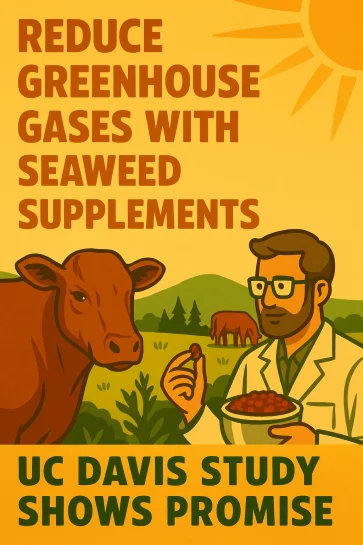
The experimental trial took place at a Montana ranch, where researchers monitored 24 steers throughout the winter season. They added small quantities of the marine plant into mineral pellets, which the cattle consumed voluntarily during their regular supplementation period. The treated animals demonstrated much lower methane output compared to the control group, while simultaneously maintaining healthy weight gain and normal behavioral patterns. This marked the first successful use of seaweed-based additives in free-ranging, pasture-fed livestock.
Livestock add significantly to global methane emissions, making this discovery particularly valuable for environmental conservation efforts. Methane ranks among the most powerful greenhouse gases, speeding up climate change. Therefore, incorporating seaweed supplements into cattle diets could become an essential component of eco-friendly farming practices. However, widespread adoption depends heavily on achieving cost-effective, large-scale production that remains economically affordable for ranch operators worldwide.
Despite these positive findings, several problems must be overcome before universal application becomes possible. Primary challenges include establishing large seaweed cultivation facilities capable of meeting global demand. Additionally, regulatory authorities must approve these supplements for commercial agricultural use. Finally, practical integration strategies need development to ensure these additives work well with diverse grazing systems across different geographical regions and climatic conditions, making this innovation accessible to farmers everywhere.
https://www.ucdavis.edu/al
Question 23: All of the following are mentioned as challenges EXCEPT _________.
A. Training programs for ranchers and farmers
B. Large-scale seaweed cultivation facilities
C. Regulatory approval from authorities
D. Integration with diverse grazing systems
Thầy Minh Tuấn
Chuyên giaĐã trả lời ngày 06/04/2026