Tài liệu hỗ trợ

Tải MIỄN PHÍ file Word kèm ma trận và lời giải chi tiết

Liên hệ Zalo 0915347068 để nhận file nhanh chóng.

Liên hệ Zalo 0915347068

ĐỀ VIP 3 - TT - MỤC TIÊU 9+ TN THPT MÔN TIẾNG ANH 2026

(Đề thi có ... trang)

Môn thi: Tiếng Anh

Năm 2026

Thời gian làm bài: ... phút, không kể thời gian phát đề.

Họ, tên thí sinh:

Số báo danh:

Read the following advertisement and mark the letter A, B, C or D on your answer sheet to indicate the option that best fits each of the numbered blanks from 1 to 6.

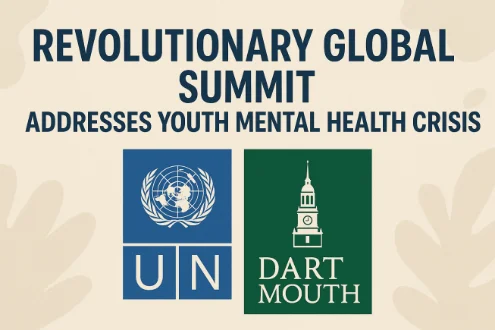
Revolutionary Global Summit Addresses Youth Mental Health Crisis

        The groundbreaking UNDP-Dartmouth symposium has successfully brought together leading experts (1)_________ are dedicated to tackling the unprecedented decline in youth mental well-being. Statistics (2)_________ by renowned institutions reveal alarming trends, with 31% of children experiencing mental health issues within a single month.

        This comprehensive research clearly demonstrates how digital platforms are (3)_________ the long-standing U-shaped relationship in well-being among young people globally. The three-day event (4)_________ immediate coordinated action to address what experts describe as a global coordination problem.

        (5)_________ of participants emphasized that mental well-being must become central to human development policies, not merely a health sector concern. The newly established "Dartmouth Principles" will guide future interventions, focusing on (6)_________ social connections, regulating digital platforms, and promoting offline interactions. Hope remains strong as collaborative solutions emerge to support our youth's future.

https://hdr.undp.org/lk

Question 1:A. who
B.  
whom
C.  
that
D.  
which

Xem chi tiếtXem đáp án và lời giải

Question 2:A. publishing
B.  
published
C.  
had published
D.  
which published

Xem chi tiếtXem đáp án và lời giải

Question 3:A. reinforcing
B.  
establishing
C.  
reversing
D.  
documenting

Xem chi tiếtXem đáp án và lời giải

Question 4:A. brought about
B.  
resulted in
C.  
focused on
D.  
called for

Xem chi tiếtXem đáp án và lời giải

Question 5:A. majority
B.  
portion
C.  
minority
D.  
number

Xem chi tiếtXem đáp án và lời giải

Question 6:A. strengthen
B.  
strength
C.  
strengthening 
D.  
strengthly


Xem chi tiếtXem đáp án và lời giải

Read of the following leaflet and mark the letter A, B, C or D on your answer sheet to indicate the option that best fits each of the numbered blanks from 7 to 12.

URGENT: Global Mental Health Crisis Demands Immediate Action

        The World Health Organization's latest findings reveal an alarming reality that puts millions of lives (7)_________ stake across the globe. (8)_________ over one billion people suffer from mental health conditions, most receive inadequate care due to persistent resource shortages.

        WHO's comprehensive prevention strategies highlight (9)_________ worldwide, with only 13 workers available per 100,000 people. The recently published updated (10)_________ estimates show 727,000 deaths in 2021, making suicide the third leading cause among young adults.

        Some countries invest significantly in mental healthcare, while (11)_________ struggle with minimal funding. Current data reveals that (12)_________ disparities are wide, ranging dramatically from 65 per person in wealthy nations compared to merely 0.04 in low-income countries.

        These shocking statistics demand immediate global coordination to strengthen mental health services, develop community-based care models, and ensure universal access to quality treatment for all populations worldwide.

        Act now—mental health cannot wait!

https://www.who.int/lk

Question 7:A. to
B.  
at
C.  
on
D.  
about

Xem chi tiếtXem đáp án và lời giải

Question 8:A. Moreover
B.  
However
C.  
Unless
D.  
Although

Xem chi tiếtXem đáp án và lời giải

Question 9:A. critical workforce shortages
B.  
critical shortages workforce 


C.  
workforce shortages critical 
D.  
shortages workforce critical 

Xem chi tiếtXem đáp án và lời giải

Question 10:A. suicide
B.  
mortality
C.  
fatality
D.  
homicide

Xem chi tiếtXem đáp án và lời giải

Question 11:A. another
B.  
other
C.  
others
D.  
the others

Xem chi tiếtXem đáp án và lời giải

Question 12:A. funding
B.  
allocation
C.  
investment
D.  
spending


Xem chi tiếtXem đáp án và lời giải

Mark the letter A, B, C or D on your answer sheet to indicate the best arrangement of utterances or sentences to make a meaningful exchange or text in each of the following questions from 13 to 17.

Question 13:

A.         Emma: Let's ask our teacher if we can study here every day!

B.         Emma: I love our new outdoor classroom by the garden!

C.         Alex: Me too! I learn faster when I can touch real plants and hear the birds singing.

A.  b-a-c        
B.  
a-b-c        
C.  
b-c-a
D.  
c-b-a

Xem chi tiếtXem đáp án và lời giải

Question 14:

A.         Sam: New Zealand did this for their river, and it worked well because pollution stopped quickly after that.

B.         Maya: I heard that some countries give legal rights to forests, but I don't understand how trees can have rights like people.

C.         Maya: I think this is smart because nature needs protection, and traditional laws weren't strong enough to help.

D.         Maya: When companies want to cut down trees, the forest can now say 'no' through its legal representatives.

e.        Sam: It sounds strange, but it helps protect nature because lawyers can fight for the forests in court.

A.  b-e-d-a-c
B.  
e-d-b-c-a
C.  
b-c-e-d-a
D.  
a-b-d-e-c

Xem chi tiếtXem đáp án và lời giải

Question 15:

Dear Lisa,

A.         If we combine technology with nature protection, ecotourism will become more sustainable and profitable.

B.         Although the virtual reality tours are expensive, they let people explore rainforests without damaging them.

C.         When tourists use our solar-powered boats, they can see dolphins while protecting the ocean environment.

D.         I'm excited about the new ecotourism project because it will help both travelers and nature.

e.        Since local guides use smartphone apps, visitors learn more about wildlife than they did before.

Best wishes,

LK

A.  b-c-e-d-a
B.  
e-d-b-c-a
C.  
c-a-d-e-b
D.  
d-c-b-e-a

Xem chi tiếtXem đáp án và lời giải

Question 16:

A.         First, look for certifications from green organizations, and check if they follow international environmental standards.

B.         The best companies use renewable energy and limit group sizes so they don't damage the natural environment you want to visit.

C.         Before you book, read customer reviews online and ask questions about their practices because this helps you make the right choice.

D.         When you plan an eco-trip, choosing the right operator is important because it affects both nature and local communities.

e.        Since ethical operators work with local people, they should hire local guides and support community projects that benefit everyone.

A.  e-b-d-a-c
B.  
a-e-b-d-c
C.  
b-a-d-e-c
D.  
d-a-e-b-c

Xem chi tiếtXem đáp án và lời giải

Question 17:

A.         Some cultures call rivers "our grandmother" because they believe water has a spirit, so they take better care of their waterways.

B.         When we call nature "resources," we think about using them, but when we say "natural communities," we want to protect them.

C.         If people describe forests as "timber" or "wood supply," they see trees as products, and this makes cutting them seem normal.

D.         Since our words create our thoughts, we should choose language that shows respect for nature because this changes how we act.

e.        Scientists now use words like "ecosystem services" and "biodiversity," and these terms help people understand that nature works for us.

A.  b-a-d-c-e
B.  
b-c-a-e-d
C.  
b-e-d-c-a
D.  
b-e-c-a-d


Xem chi tiếtXem đáp án và lời giải

Read the following passage about Climate Inequality and Environmental Degradation and mark the letter A, B, C or D on your answer sheet to indicate the option that best fits each of the numbered blanks from 18 to 22.

The Climate Inequality Report 2025 shows big differences in who is responsible for climate change and how wealth is shared. Rich people cause much more greenhouse gas pollution through their investments than through what they buy and use personally. If wealthy people continue to own most of the world's money and assets, (18)_________. The richest people control about 41% of carbon emissions through their private investments. This is much more than the pollution they create from their daily lives. However, (19)_________, even though they cause very little pollution. Poor people cannot afford clean energy or protect themselves from climate problems, while rich people can buy low-carbon investments and keep themselves safe from environmental damage.

The study shows that owning polluting companies and investments causes more environmental harm than individual choices like driving or flying. (20)_________, it becomes very difficult to move toward clean energy. Investment funds that focus on oil, gas, and coal create huge amounts of carbon pollution while making lots of money for their owners. The report suggests several solutions: stop all investments in fossil fuel companies, create special taxes on carbon-heavy wealth, and help governments invest in clean energy. (21)_________. The goal is to spread ownership of clean energy companies more fairly while reducing both pollution and inequality between the rich and the poor. Solving this problem needs countries to work together in ways never seen before. Without policies that share wealth more fairly, climate change will make the gap between those (22)_________. New government systems must make sure that environmental costs are shared fairly across all levels of society.

https://wid.world/lk

Question 18:

A.  having controlled most assets the wealthy will accumulate much more wealth by 2050

B.  the companies which wealthy people owns will generate much more profits by 2050

C.  the gap between the rich and the poor will become much worse by 2050

D.  the investments who rich individuals prefer will increase much more rapidly by 2050

Xem chi tiếtXem đáp án và lời giải

Question 19:

A.  the company announced what luxury brands will launch the newest fashion collections

B.  the study reveals how successful entrepreneurs manage the largest technology corporations effectively

C.  the report shows that poor communities suffer the most from climate change

D. the research demonstrates whether expensive restaurants provide the finest dining experiences worldwide

Xem chi tiếtXem đáp án và lời giải

Question 20:

A.  When wealthy people own most of the fossil fuel companies

B.  Because talented chefs prepare delicious meals at expensive restaurants daily

C.  Artists paint beautiful pictures, musicians play wonderful songs very successfully

D.  While professional athletes train very hard for international competitions regularly

Xem chi tiếtXem đáp án và lời giải

Question 21:

A.  Professional athletes train very hard daily, they compete in international tournaments every year

B.  While famous chefs create delicious dishes and serve customers at expensive restaurants daily

C.  Because talented musicians perform amazing concerts and entertain audiences around the world successfully

D.  These actions should target both environmental and social problems at the same time

Xem chi tiếtXem đáp án và lời giải

Question 22:

A.  will creates beautiful art and those whom appreciate it very much

B.  who cause pollution and those who suffer from it even bigger

C.  whom play beautiful music and those which listening to it very carefully

D.  has enjoyed delicious food and those whom cooking it every day


Xem chi tiếtXem đáp án và lời giải

Read the following passage about Global Labour Market Challenges in 2024 and mark the letter A, B, C or D on your answer sheet to indicate the best answer to each of the following questions from 23 to 30.

The International Labour Organisation's latest assessment reveals that despite achieving a historically low unemployment rate of approximately 5% in 2024, global labor markets conceal profound structural deficiencies. This ostensibly encouraging statistic masks underlying vulnerabilities that undermine sustainable economic development and social cohesion across diverse geographical regions. Contemporary economic indicators frequently obscure systemic inequalities that perpetuate labor market fragmentation and inhibit comprehensive recovery efforts.

Youth unemployment presents particularly alarming trends, persisting at approximately 12.6% globally. Numerous young individuals remain trapped within NEET status—neither engaged in education, employment, nor vocational training programs. This phenomenon disproportionately affects developing economies, where their educational infrastructure and employment opportunities remain inadequate. The proliferation of such circumstances threatens long-term human capital development and perpetuates intergenerational poverty cycles. Educational misalignment with market demands exacerbates these challenges, creating substantial skill gaps that hinder economic progression.

Informal employment sectors continue dominating labor markets, with working poverty and underemployment reverting to pre-pandemic levels. These conditions significantly impede progress toward establishing decent work standards. Furthermore, global productivity growth demonstrates concerning stagnation, while structural economic transformation toward higher-value manufacturing and service industries remains largely stalled. Consequently, newly created positions predominantly offer minimal compensation and limited advancement prospects. Technological disruption compounds these difficulties, displacing traditional employment patterns without providing adequate alternative opportunities.

Regional disparities exacerbate these challenges, with women, youth, and populations in low-income areas bearing disproportionate burdens. The report emphasizes that without comprehensive policy interventions, decent work deficits will persist, jeopardizing the achievements of Sustainable Development Goal 8. Recommended strategies encompass enhancing skills development, formalizing employment arrangements, strengthening social protection mechanisms, facilitating economic transformation, and ensuring equitable management of green and digital transitions. International cooperation becomes increasingly vital for implementing sustainable solutions that address multifaceted labor market complexities.

https://www.ilo.org/lk

Question 23: All of the following are mentioned as challenges EXCEPT _________.

A.  Currency fluctuation impacts employment.

B.  Youth unemployment is reaching 12.6% globally

C.  Informal employment sectors dominate labor markets

D.  Regional disparities affecting vulnerable populations

Xem chi tiếtXem đáp án và lời giải

Question 24: The word “deficiencies” in paragraph 1 is OPPOSITE in meaning to _________.

A.  inadequacies                                B. limitations                        C. vulnerabilities                                D. proficiencies

Xem chi tiếtXem đáp án và lời giải

Question 25: The word “their” in paragraph 2 refers to _________.

A.  young individuals

B.  vocational training programs

C.  developing economies

D.  employment opportunities

Xem chi tiếtXem đáp án và lời giải

Question 26: The word “reverting” in paragraph 3 could be best replaced by _________.

A.  escalating                                        B. deteriorating                        C. returning                                        D. consolidating

Xem chi tiếtXem đáp án và lời giải

Question 27: Which of the following best paraphrases the underlined sentence in paragraph 4?

A.  Geographic inequalities worsen problems, affecting marginalized communities unequally across economic sectors.

B.  Regional differences intensify challenges, with vulnerable groups experiencing more severe consequences than others.

C.  Territorial imbalances amplify difficulties, causing disadvantaged populations to face greater urban employment obstacles.

D.  Economic variations between areas compound issues, leading excluded societies to encounter increased opportunity barriers.

Xem chi tiếtXem đáp án và lời giải

Question 28: Which of the following is TRUE according to the passage?

A.  Global unemployment reached 5% in 2024, representing historically low levels despite underlying structural deficiencies.

B.  Youth unemployment decreased below 12.6% globally due to enhanced infrastructure and expanded opportunities.

C.  Technological disruption provided adequate alternatives while successfully mitigating traditional job displacement concerns.

D.  Global productivity growth improved significantly while structural transformation toward higher-value industries accelerated.

Xem chi tiếtXem đáp án và lời giải

Question 29: In which paragraph does the writer mention what the main consequence of stalled structural transformation is?

A.  Paragraph 2                                B. Paragraph 1                        C. Paragraph 4                                D. Paragraph 3

Xem chi tiếtXem đáp án và lời giải

Question 30: In which paragraph does the writer mention which groups are specifically mentioned as facing disproportionate challenges?

A.  Paragraph 2                                B. Paragraph 1                        C. Paragraph 4                                D. Paragraph 3


Xem chi tiếtXem đáp án và lời giải

Read the following passage about the The Changing Face of Pandemic Risk: How We Need to Adapt, Protect and Connect and mark the letter A, B, C or D on your answer sheet to indicate the best answer to each of the following questions from 31 to 40.

The Global Preparedness Monitoring Board's latest assessment underscores that pandemic readiness has become the elephant in the room for international health security. As emerging pathogens proliferate while dormant diseases resurface with alarming frequency, nations cannot afford to sit on the fence regarding comprehensive preparedness strategies. [I] The COVID-19 crisis demonstrated catastrophic consequences when countries were caught off guard, necessitating a back-to-basics approach that prioritizes systematic resilience-building across all sectors while ensuring sustainable long-term planning mechanisms.

The first pillar, adaptation, requires governments to recalibrate their pandemic frameworks, addressing contemporary vulnerabilities and emerging technological challenges. Climate fluctuations, rapid urbanization, intercontinental mobility, and zoonotic transmission pathways create unprecedented challenges for global health security systems. Agricultural practices facilitating pathogen spillover, combined with misinformation campaigns and eroding public confidence, amplify societal susceptibility to widespread disease outbreaks. [II] Effective preparedness demands flexible methodologies that evolve alongside emerging threats while incorporating evidence-based scientific research and innovative surveillance technologies.

Protection encompasses fortifying healthcare infrastructure and expanding primary medical services, particularly for marginalized populations facing disproportionate health risks. Building community trust through transparent communication while combating infodemics becomes paramount for maintaining social cohesion during crisis periods. [III] The connecting pillar emphasizes cross-sectoral collaboration where governments, health institutions, researchers, and private enterprises must coordinate knowledge-sharing, enhance surveillance systems, and streamline distribution of vaccines, therapeutics, and essential supplies through efficient global networks and strategic partnerships.

Ultimately, pandemic preparedness represents an investment in global stability rather than merely a healthcare consideration requiring immediate governmental attention. [IV] The economic disruption witnessed during COVID-19 highlighted how health crises devastate productivity, commerce, and international trade relationships across multiple industries. Strengthening preparedness mechanisms safeguards not only population wellness but also economic resilience and community well-being for future generations. By embracing adaptive strategies, protecting vulnerable constituencies, and fostering international cooperation through multilateral agreements, nations can construct a more secure, resilient world equipped to confront future health emergencies effectively while maintaining sustainable development goals.

https://www.who.int/lk

Question 31: The phrase “back-to-basics” in paragraph 1 has the closest meaning to _________.

A.  build up                                        B. branch out                        C. boil down                                D. scale up

Xem chi tiếtXem đáp án và lời giải

Question 32: All of the following are mentioned as challenges EXCEPT _________.

A.  Climate fluctuations

B.  Misinformation campaigns

C.  Rapid urbanization

D.  Cyber security threats

Xem chi tiếtXem đáp án và lời giải

Question 33: Where in the paragraph does the following sentence best fit?

Therefore, traditional prevention methods remain insufficient for modern pandemic challenges.

A. [I]
B. [II]
C. [III]
D. [IV]

Xem chi tiếtXem đáp án và lời giải

Question 34: The word “their” in paragraph 2 refers to _________.

A.  governments

B.  contemporary vulnerabilities

C.  pandemic frameworks

D.  emerging technological challenges

Xem chi tiếtXem đáp án và lời giải

Question 35: Which of the following best summarises paragraph 3?

A.  Healthcare expansion and international collaboration for medical supply distribution during emergencies.

B.  Healthcare strengthening, community trust building, and cross-sectoral collaboration for resource coordination.

C.  Medical improvements for marginalized groups and international partnerships for coordinated responses.

D.  Emergency protocols and communication systems to maintain supply stability during outbreaks.

Xem chi tiếtXem đáp án và lời giải

Question 36: The word “surveillance” in paragraph 3 is OPPOSITE in meaning to _________.

A.  vigilance                                        B. scrutiny                                C. circumspection                        D. negligence

Xem chi tiếtXem đáp án và lời giải

Question 37: Which of the following best paraphrases the underlined sentence in paragraph 4?

A.  Enhanced readiness protects health, economic systems, and social structures for future populations.

B.  Improved preparedness ensures medical care, financial security, and community stability across generations.

C.  Strengthened readiness safeguards public health, economic stability, and social welfare for coming generations.

D.  Better preparedness secures healthcare outcomes, economic growth, and community development for society.

Xem chi tiếtXem đáp án và lời giải

Question 38: Which of the following is TRUE according to the passage?

A.  Traditional prevention methods are insufficient for modern pandemic challenges.

B.  Climate change is the primary cause of global health security failures.

C.  Healthcare expansion prioritizes developed nations over marginalized populations.

D.  Economic disruptions from health crises affect only specific industrial sectors.

Xem chi tiếtXem đáp án và lời giải

Question 39: Which of the following can be inferred from the passage?

A.  Countries with stronger pre-existing preparedness frameworks likely experienced less severe impacts during the COVID-19 pandemic.

B.  Technological innovations represent the primary solution for overcoming contemporary challenges in global health security systems.

C.  Economic considerations remain secondary concerns compared to immediate healthcare responses during pandemic crisis management periods.

D.  Individual national responses prove sufficient for addressing cross-border health threats without requiring extensive international coordination.

Xem chi tiếtXem đáp án và lời giải

Question 40: Which of the following best summarises the passage?

A.  COVID-19 exposed critical weaknesses in traditional prevention methods, demonstrating the urgent need for adaptive healthcare frameworks and improved surveillance technologies.

B.  Pandemic preparedness requires comprehensive multi-sectoral strategies involving adaptation, protection, and international collaboration to ensure both health security and global economic stability.

C.  Healthcare infrastructure expansion and community trust-building represent the fundamental cornerstones for combating misinformation and maintaining social cohesion during health emergencies.

D.  Contemporary health threats from emerging pathogens necessitate immediate governmental investment in evidence-based research and innovative technological solutions for disease prevention.

Xem chi tiếtXem đáp án và lời giải